
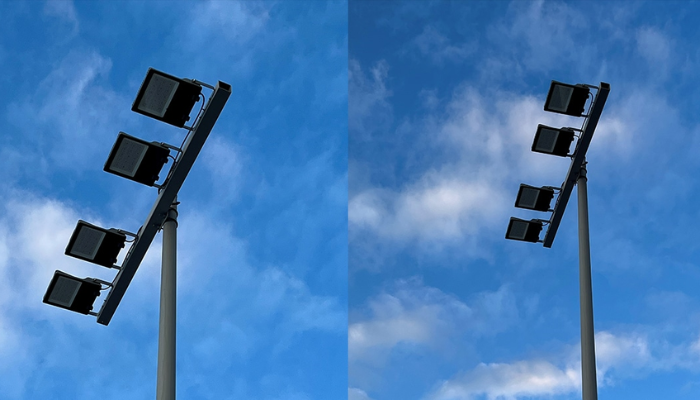

Effective projected area is a fundamental yet often misunderstood concept that plays a critical role in engineering, physics, aerodynamics, and environmental analysis. From determining drag forces on vehicles to calculating wind loads on buildings, effective projected area directly influences how objects interact with moving fluids such as air or water. Despite its technical nature, the concept has real-world implications that affect safety, efficiency, and performance across countless industries.
In simple terms, effective projected area represents the portion of an object’s surface that effectively faces the direction of flow. Unlike simple surface area measurements, it accounts for orientation, shape, and flow direction, making it far more accurate for scientific and engineering calculations. This article explores effective projected area in depth, explaining its meaning, importance, methods of calculation, practical applications, and common misconceptions.
What Is Effective Projected Area? A Clear and Practical Definition
Effective projected area refers to the area of an object as “seen” by an incoming flow when projected onto a plane perpendicular to the flow direction. This makes it distinct from actual surface area or frontal area, as it adjusts dynamically based on orientation and geometry. For example, a flat plate tilted at an angle will have a smaller effective projected area than when it faces the flow directly.
This concept is especially valuable in scenarios where forces depend on how much of an object obstructs flow. In fluid dynamics, the effective projected area determines how much air or water an object displaces, which in turn affects drag, lift, and pressure distribution. As a result, it is widely used in physics equations, engineering models, and simulation tools.
Another key aspect of effective projected area is that it simplifies complex shapes into usable values. Irregular or curved objects may not have an obvious frontal area, but their effective projected area allows engineers and scientists to quantify their interaction with flow in a consistent and comparable way.
Why Effective Projected Area Matters in Science and Engineering
The importance of effective projected area lies in its direct relationship with force calculations. In aerodynamics and hydrodynamics, drag force is proportional to the effective projected area. A small change in this area can significantly alter resistance, fuel consumption, or structural stress. This makes accurate estimation essential for design and optimization.
In civil and structural engineering, effective projected area is used to calculate wind loads on buildings, towers, and bridges. Structures with larger projected areas experience greater wind forces, increasing the need for reinforcements and safety margins. Engineers rely on effective projected area rather than simple dimensions to ensure designs can withstand extreme weather conditions.
Environmental and mechanical systems also depend on effective projected area. From solar panels exposed to wind to underwater pipelines facing ocean currents, understanding how much surface area interacts with moving fluids helps engineers predict wear, energy loss, and stability. Without this concept, many real-world calculations would be dangerously inaccurate.
How Effective Projected Area Is Calculated
Calculating effective projected area depends on the object’s shape and orientation relative to the flow. For simple flat surfaces, the calculation often involves multiplying the actual area by the cosine of the angle between the surface normal and the flow direction. This mathematical adjustment accounts for how much of the surface truly faces the flow.
For complex or irregular shapes, the calculation becomes more sophisticated. Engineers may divide the object into smaller surface elements, calculate each element’s projected contribution, and then sum them. This method improves accuracy and allows detailed modeling of real-world objects such as vehicles, aircraft, and industrial equipment.
In advanced applications, effective projected area is determined using computational simulations or experimental testing. Wind tunnels, water flumes, and computer-based fluid simulations can measure or estimate projected area under varying conditions. These approaches are especially useful when theoretical calculations become impractical due to complex geometry.
Real-World Applications of Effective Projected Area
One of the most visible applications of effective projected area is in vehicle design. Cars, trucks, bicycles, and aircraft are all shaped to minimize effective projected area in the direction of travel. Reducing this area lowers drag, improves fuel efficiency, and enhances performance. Even small design changes can yield measurable energy savings when optimized correctly.
In architecture and construction, effective projected area determines how buildings interact with wind. Tall buildings, billboards, and transmission towers are designed with wind exposure in mind. Engineers calculate projected areas to estimate forces during storms, ensuring that structures remain stable and safe under extreme conditions.
Sports and human movement also benefit from this concept. Cyclists, skiers, and speed skaters adjust body position to reduce effective projected area and increase speed. Helmets, suits, and posture are all optimized to minimize resistance, proving that effective projected area is not limited to industrial or scientific fields.
Common Misconceptions About Effective Projected Area
A frequent misconception is that effective projected area is the same as frontal area. While they may coincide in certain orientations, frontal area is a fixed measurement, whereas effective projected area changes with angle and flow direction. Confusing the two can lead to incorrect force estimates and flawed designs.
Another misunderstanding is assuming that surface area alone determines interaction with flow. In reality, an object with a large surface area may have a small effective projected area if it is aligned with the flow. This distinction is crucial in aerodynamic and hydrodynamic analyses.
Finally, some believe effective projected area is only relevant at high speeds. In truth, it matters whenever fluid flow is present, regardless of speed. Even low-velocity wind or water currents can exert forces that depend on projected area, particularly over long durations or large structures.
Conclusion: Why Effective Projected Area Is a Concept Worth Mastering
Effective projected area is far more than a technical term—it is a practical tool that bridges theory and real-world application. By accounting for orientation, shape, and flow direction, it provides a realistic measure of how objects interact with moving fluids. This makes it indispensable in engineering, physics, environmental studies, and performance optimization.
Understanding effective projected area leads to better designs, safer structures, improved efficiency, and more accurate predictions. Whether applied to vehicles, buildings, or human movement, the concept offers insights that simple measurements cannot. Mastering effective projected area ultimately means mastering how objects behave in the dynamic environments that surround them.
Frequently Asked Questions (FAQs)
1. What is effective projected area in simple terms?
Effective projected area is the part of an object’s surface that effectively faces a moving fluid, such as air or water.
2. How is effective projected area different from frontal area?
Frontal area is fixed, while effective projected area changes based on orientation and flow direction.
3. Why is effective projected area important in aerodynamics?
It directly affects drag force, fuel efficiency, and overall performance.
4. Can effective projected area change during motion?
Yes, it can change if the object’s orientation relative to the flow changes.
5. Is effective projected area used in wind load calculations?
Yes, it is essential for estimating wind forces on structures.
6. How do engineers calculate effective projected area for complex shapes?
They use surface decomposition, simulations, or experimental testing.
7. Does effective projected area matter at low speeds?
Yes, even low-speed flows exert forces influenced by projected area.
8. Is effective projected area relevant in water flow?
Absolutely, it is widely used in hydrodynamics and marine engineering.
9. Can reducing effective projected area improve efficiency?
Yes, reducing it often lowers resistance and energy consumption.
10. Is effective projected area a constant value?
No, it varies depending on orientation, shape, and flow direction.