
When setting up a fiber production laboratory, one of the most important decisions is choosing between a melt spinning machine and a wet spinning machine. Both are used to produce polymer fibers, but they work through fundamentally different mechanisms and are suited to different types of materials and research goals.
Understanding Melt Spinning
In melt spinning, the polymer is converted to a liquid state entirely through heat. The molten polymer is then extruded through a spinneret and solidified by cooling air. This process requires that the polymer be thermally stable — meaning it can be melted without decomposing.
Best suited for:
- Polyester (PET)
- Polyamide/Nylon
- Polypropylene
- Pitch-based carbon fiber precursors
- Any thermoplastic with melting point below 350–400°C
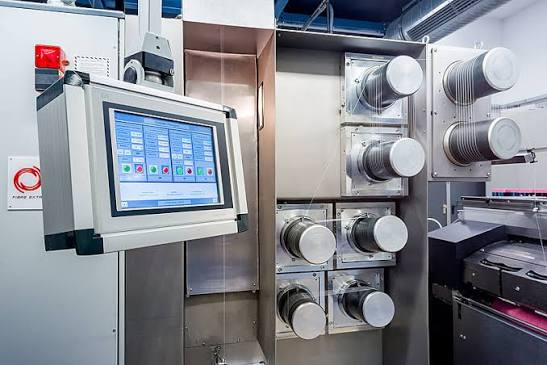
The FYI Tester DW7090A Melt Spinning Machine operates at temperatures up to 400°C under an inert nitrogen gas atmosphere, protecting heat-sensitive polymers from oxidative degradation.
Understanding Wet Spinning
Wet spinning dissolves the polymer in a chemical solvent. The solution is then extruded through a spinneret into a liquid coagulation bath, where the solvent diffuses out and the fiber solidifies. This process is used for polymers that degrade before melting.
Best suited for:
- Cellulose-based fibers (rayon, lyocell)
- Acrylic fibers (PAN — used for carbon fiber precursors)
- Aramid fibers (Kevlar)
- Specialty polymers that cannot withstand high temperatures
The FYI Tester also offers the DW7091A Wet Spinning Machine for these applications.
Side-by-Side Comparison
| Feature | Melt Spinning Machine | Wet Spinning Machine |
| Solvent required | No | Yes |
| Process speed | Faster | Slower |
| Polymer type | Thermoplastics | Solvent-soluble polymers |
| Temperature range | Up to 400°C | Ambient to moderate |
| Environmental considerations | Lower (no solvents) | Solvent recovery needed |
| Fiber applications | Polyester, Nylon, PP | Rayon, Acrylic, Aramid |
Which Should You Choose?
If your research focuses on thermoplastic polymers and you need a fast, solvent-free fiber production process, a melt spinning machine is the right choice. If your materials require dissolution before spinning, a wet spinning machine is the appropriate option.
Many advanced fiber research labs invest in both to cover the full spectrum of spinning techniques.